Evaluating the Watercolor Baby Deer Fawn for Embroidery
When a new design file lands in my library, I don’t just look at it on screen. I imagine it stitched out, on fabric, in the hands of a customer. That’s the real test. Today, I’m thinking through the Watercolor Baby Deer Fawn graphic from the perspective of a working embroidery designer. This isn’t about specs; it’s about how this design performs in the real world of custom apparel, handmade products, and client projects.
The First Impression: Softness and Sentiment
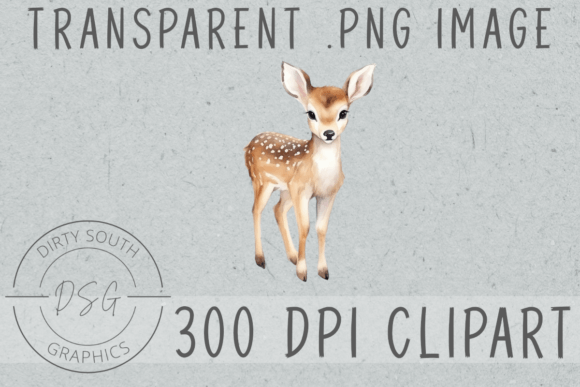
Opening the file, the immediate feeling is one of gentle charm. The watercolor style creates a soft, almost dreamy mood, which is perfect for projects aiming for a tender, sentimental touch. The fawn’s shape is clear and well-defined, but the edges have that painterly, blended quality. This tells me it’s not a design meant for ultra-hard, geometric lines. It belongs to a category of embroidery projects where aesthetic appeal outweighs technical precision—think baby items, nursery decor, or personalized gifts meant to evoke warmth.
A Practical Scenario: Embroidering a Boutique Baby Blanket
Let’s put it into a real case. Imagine you’re preparing a custom embroidered baby blanket for a client or for your own craft business inventory. You choose a soft, minky fabric. The Watercolor Baby Deer Fawn, with its transparent background and high-resolution detail, gives you a clear visual to work from. The key question becomes: how will those soft watercolor transitions translate into stitches? On a blanket, with a larger hoop size available, you could use a combination of fill stitch for the body and finer running stitch or lighter satin stitch for the delicate details. The final product would feel handmade and artistic, not mass-produced. That’s a significant value boost for an Etsy seller or small shop.
Where This Design Shines: Projects Built on Feeling
The fawn’s visual personality makes it a natural fit for products where emotion drives the sale. It would be excellent on tote bags aimed at mothers, as a subtle accent on a pillow cover in a cozy reading nook, or as the central motif on a special occasion sweatshirt for a baby’s first holiday. For apparel decorators, it elevates a simple garment into a personalized gift. In my experience, customers react strongly to this kind of evocative imagery—it increases buyer engagement and makes the finished product feel uniquely thoughtful.
Navigating the Practicalities of Stitching
As an experienced designer, my next thoughts turn to execution. The file being a PNG at 2500×2500 pixels gives us plenty of data for creating a clean machine embroidery design. However, since it’s a raster image and not a vector file, the embroidery digitizer will need to interpret those soft edges. This means paying close attention to stitch density in areas that mimic watercolor washes. Too dense, and you lose the soft effect; too sparse, and the design might look incomplete on fabric.
For successful results, I always advise testing on scrap fabric first. Use a fabric similar to your final product—if it’s for a baby blanket, test on a similar textured fabric. Check thread color contrast against your background. The color sublimation aspect suggests it’s designed with a specific palette, so matching those hues with your threads will maintain the design’s original mood. Also, run a test on both light and dark fabric backgrounds if you plan to use it across different products. A watercolor design on a dark fabric will require careful thread choice to retain its luminosity.
Careful Application: Where to Proceed with Caution
This design, with its likely detailed corners and blended areas, requires careful planning on certain items. On small hoop sizes, like for a cap or a tiny patch, the finer details might get lost or become too dense. Stretchy fabric or very thin fabric will need the right stabilizer to prevent distortion of those soft shapes. For products needing frequent washing, like kitchen towels or aprons, ensure the stitch structure is robust enough to handle it—perhaps considering it as an applique design with fabric pieces could add durability while keeping the watercolor look.
It’s also worth noting that for commercial embroidery or selling finished items, you must confirm the licensing terms of the original graphic. Since it’s categorized under Illustrations and Graphics, understanding its use for commercial embroidery projects is a essential step before production.
Turning a Graphic into a Professional Product
The ultimate goal is to transform this design asset into a product that builds customer trust and reflects your professionalism. The Watercolor Baby Deer Fawn, when embroidered well, contributes significantly to brand consistency for a shop specializing in gentle, nature-inspired goods. Its giftability is high. For a digital product seller, this graphic could also be used effectively in printable mockups to showcase your embroidery services, giving clients a clear preview.
My final note is always about clarity. Before finalizing any project, inspect how the small details of the fawn—like the eyes or the subtle shading—will stitch out. Sometimes, simplifying a tiny area in your digitizing process can save a lot of thread and improve the final clarity on the garment. A clean, recognizable fawn on a embroidered patch or sweatshirt is far more valuable than a muddy, overstitched one.
The Real-World Value for Makers
In the hands of a maker, this design is more than a file. It’s a starting point for creating something with emotional resonance. Whether you’re a hobbyist making a holiday gift or a creative entrepreneur building your small shop merchandise, the Watercolor Baby Deer Fawn offers a versatile, aesthetically strong foundation. Your skill in translating it from a PNG graphic to a tangible, stitched piece will determine its success. Plan your stitch types, test your materials, and choose your projects wisely—this fawn has the potential to become a beloved detail on many handmade items.